


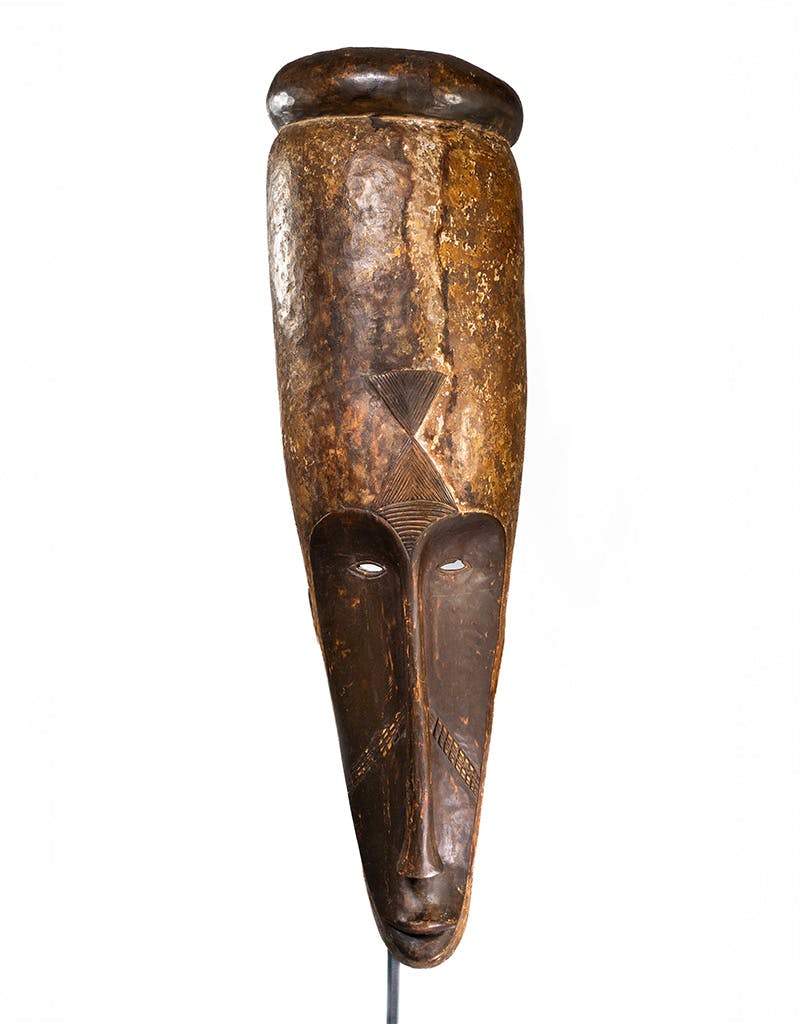


Ngil
Origin: Gabon
People/Ethnic Group: Fang
Technique: Sculptural
Height: 59 cm
Age: circa 1950
This Fang mask was created for a secret society called ngil (gorilla). It is used during the induction ceremonies and the execution of criminals. These ceremonies always take place after dark, lit by torches. It is easily recognizable because the facepiece is shaped like a heart painted white and surrounded by a black border. The white color protects against evil magic. On the forehead are semicircles representing contact with the ancestral world. The scarifications on the Polik are most likely a personal characteristic of a deceased ancestor, their clan designation, or a symbol of tears. The Fang people, numbering approximately 800,000, inhabit Cameroon, Equatorial Guinea, and Gabon. They settled in the region about 150 years ago. The Fang were primarily hunters and fishers. Their social structure was based on clan and family ties. They were a migratory society. For this reason, the Fang did not develop a tradition of creating home reliquaries. Quite the opposite. In the 1920s and 1930s, they created portable reliquaries. These reliquaries, like the Bieri cult they practiced, based on a belief in the causative power of ancestors, are the most characteristic elements of Fang culture and art. Bieri reliquaries, or independent figurines of ancestors, are fed rice to ensure the favor of the spirits. They can be divided into three groups:
• Heads with long legs • Torso • Full figures, sitting or standing Crafted with a relatively high degree of schematization and the delicacy of their rounded surfaces. The position of the hands is characteristic, usually around the abdomen and joined together, sometimes holding an object. Note the cylindrical shape of the navel. Their proportions resemble those of newborns. This signifies the development of an individual or community; from newborns to the living to ancestors. The containers usually contain remains of jaws, skulls, or smaller bones. Bieri figurines, intended for the community, are used in important occasions (changing the location of the village, sowing crops, palaver, or before major hunts and wars. (It should be noted that the container is one with the ashes of the ancestors. If they are separated, they lose their magical power). Rituals using them are usually accompanied by prayers, votive offerings to the ancestors (rubbing with magical powders and painting), and the consumption of palm wine (in modern times, other alcoholic beverages can be used). The latest way of using bieri is during elections. The head of the figurine is then rubbed with special oils to support the candidate or, after their election, to ensure wise decisions. Bieri are also used for medicinal rituals and ceremonies related to the initiation of young boys during the festival called So. An important type of Fang mask is the ngontang. This mask, usually a helmet with a prominent forehead, depicts a young girl. It is often equipped with horns, which refers to the antelope and its connections with vital forces. The Fang are also famous for crafting figurative harps, presentation masks worn on the shoulders, spoons, combs, and everyday objects.
History / Provenance:
Collection - Rudolf Steinmann
Collection - Ryszard and Joanna Stolarski - purchased in 2023
Download PDF documentation