


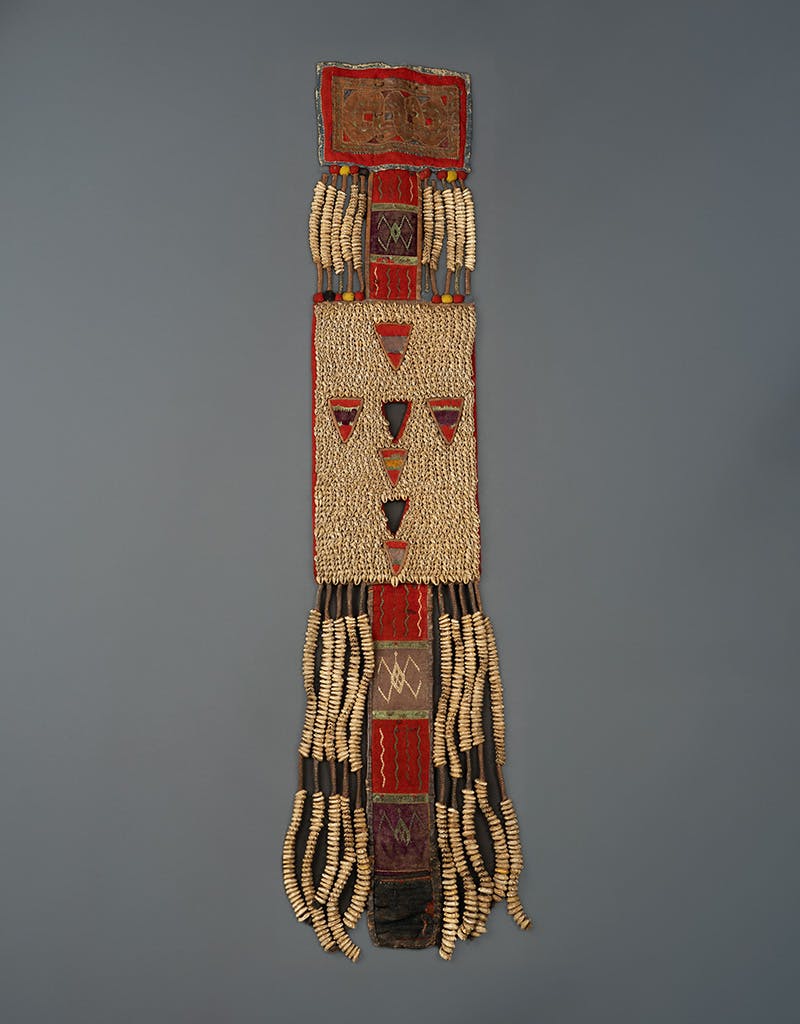


Sword Sheath
Origin: Central Africa (probably the Congo basin)
People/Ethnic Group: to be verified
Material: Plant fibres, cowrie shells, glass beads, fabric, leather
Technique: Plaitwork, beadwork, appliqué
Age: first half of the 20th century
A ceremonial sheath for a sword or prestige short knife, executed in the technique of plant-fibre plaitwork with rich finishing of cowrie shells, glass beads, and textile appliqué in vivid colours (red, ochre, black). A tripartite form: rectangular "head" with a figurative appliqué, a middle body with a regular geometric pattern, and a lower fringe of plaited braids tipped with cowries.
Objects of this kind served as insignia of authority or status — worn at the waist or slung over the shoulder during durbars, initiations, and dignitary funerals. Cowrie shells, the ancient medium of exchange in the African interior, combined economic value with the symbolism of female fertility and protection from the evil eye. The geometric triangles inscribed in the central field are often read as schematic representations of the female womb and eye.
Regional identification required — analogies point to the Yaka, Suku, Lulua or Pende traditions (Kasai/Kwango basin).
[DRAFT — preliminary description based on visual analysis of the object and its general cultural context. Subject to verification by an expert in African art; the full catalog entry will be prepared in separate KRS documentation.]
Download PDF documentation