


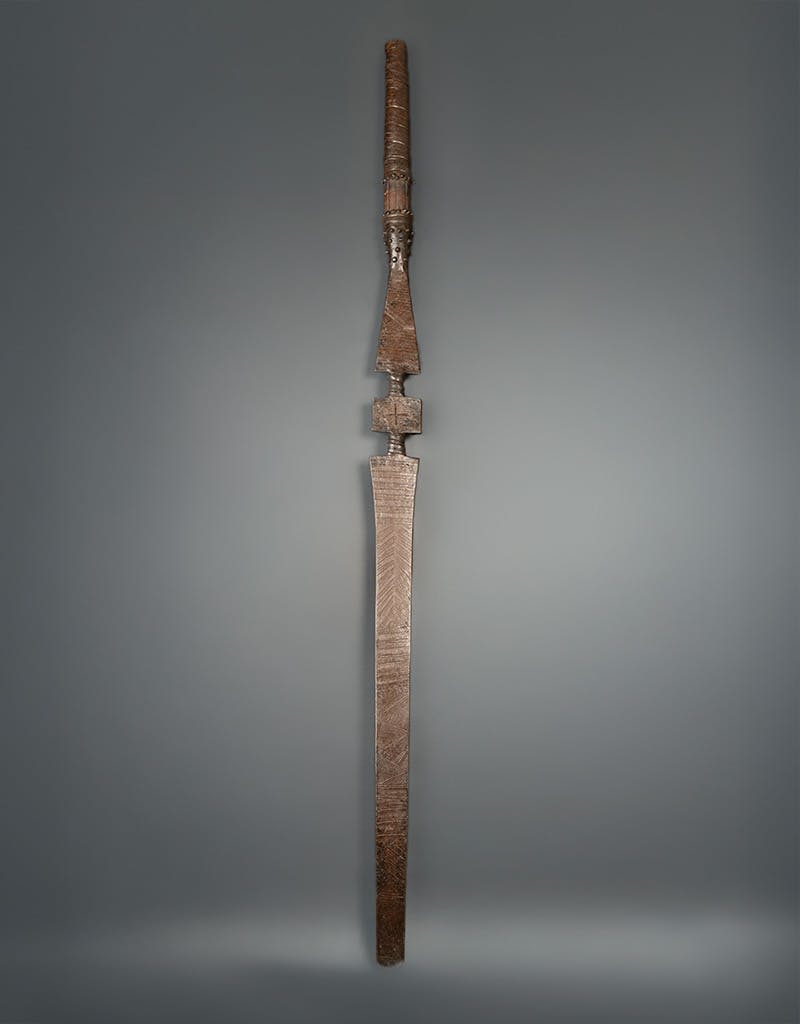


Mbele a Lulendo (Long Ceremonial Sword)
Origin: Central Africa (probably the Congo basin)
People/Ethnic Group: to be verified
Material: Forged iron, wood, plant fibres
Technique: Smithing, binding, engraving
Age: first half of the 20th century
A second ceremonial sword of the same typological family — with a longer, uniform blade and similar hilt construction (fibre binding, square connector with metal studs). The blade's surface is covered with a dense, herringbone-pattern decorative engraving — typical of the smithing traditions of central Congo. The pattern is both ornamental and a property considered to cool the sacrificial blood during offering rites.
Excellent state of preservation; the iron surface bears a natural dark patina. The sharp, regular incisions testify to the work of an experienced smith — in Congolese cultures the smith (mfumu ya muanga) held a position equal to that of the priest, combining the domain of technique with religion. The pair of swords (this one and the previous) suggests an origin in a single workshop or tradition — a pair of dignitary insignia was a ceremonial standard (one for the holder, the other for his son or deputy).
Regional identification to be confirmed.
[DRAFT — preliminary description based on visual analysis of the object and its general cultural context. Subject to verification by an expert in African art; the full catalog entry will be prepared in separate KRS documentation.]
Download PDF documentation