


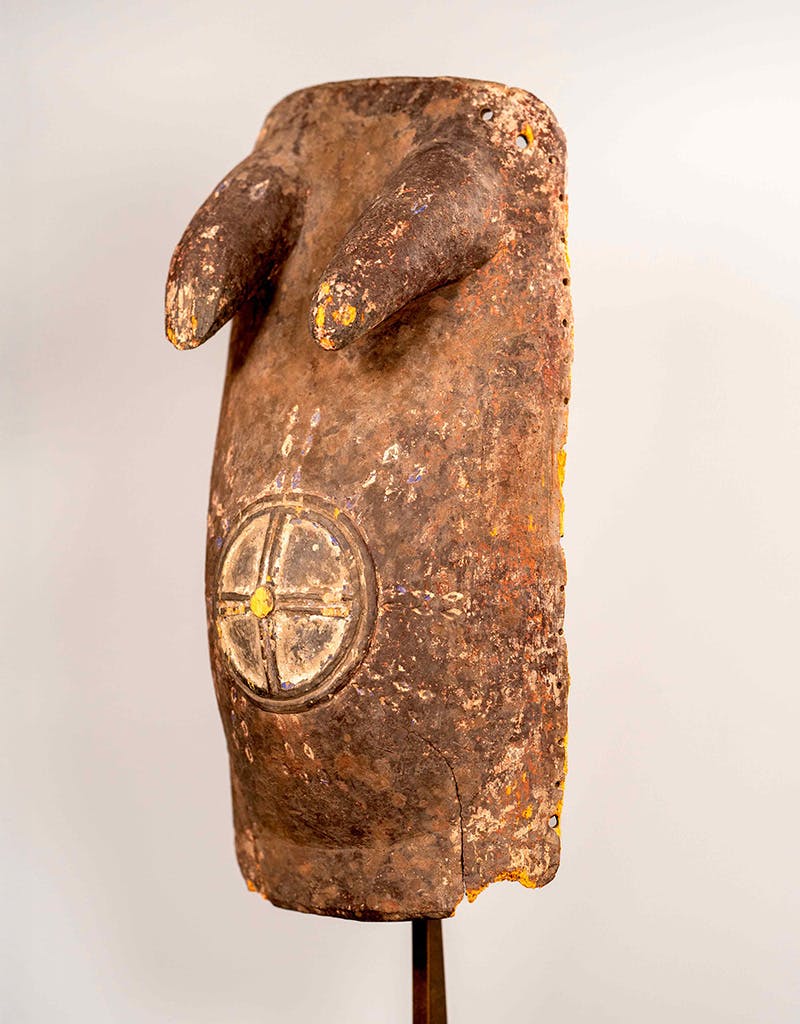


Gelede Body Mask
Origin: Nigeria, Benin
People/Ethnic Group: Yoruba
Material: Wood, natural patina, kaolin, pigments
Technique: Sculptural, polychromy
Age: circa 1950
This mask belongs to the Gelede costume-mask type of the Yoruba people of western Nigeria and adjacent regions of present-day Benin. Unlike classic Gelede masks worn on the head, this is a torso mask ("body mask") — a costume element fitted to the dancer's body during the Èfè/Gelede performance. The carving represents a stylised female torso: marked breasts, abdomen, and a central, circularly carved navel rosette with a cruciform motif — a symbol of life, fertility, and intergenerational continuity.
The Gelede spectacle honours Awọn Iya Wa — "our mothers": elder, venerable women and those endowed with spiritual power (àjẹ́), regarded as guardians of social balance. This mask, worn in the first part of the ceremony, embodies the very presence of that feminine power. Traces of kaolin (pemba), yellow, and red pigments testify to repeated ritual use. In 2001 the Gelede tradition was inscribed on the UNESCO Representative List of the Intangible Cultural Heritage of Humanity.
[DRAFT — preliminary description based on visual analysis of the object and its general cultural context. Subject to verification by an expert in African art; the full catalog entry will be prepared in separate KRS documentation.]
Download PDF documentation