


Exhibits
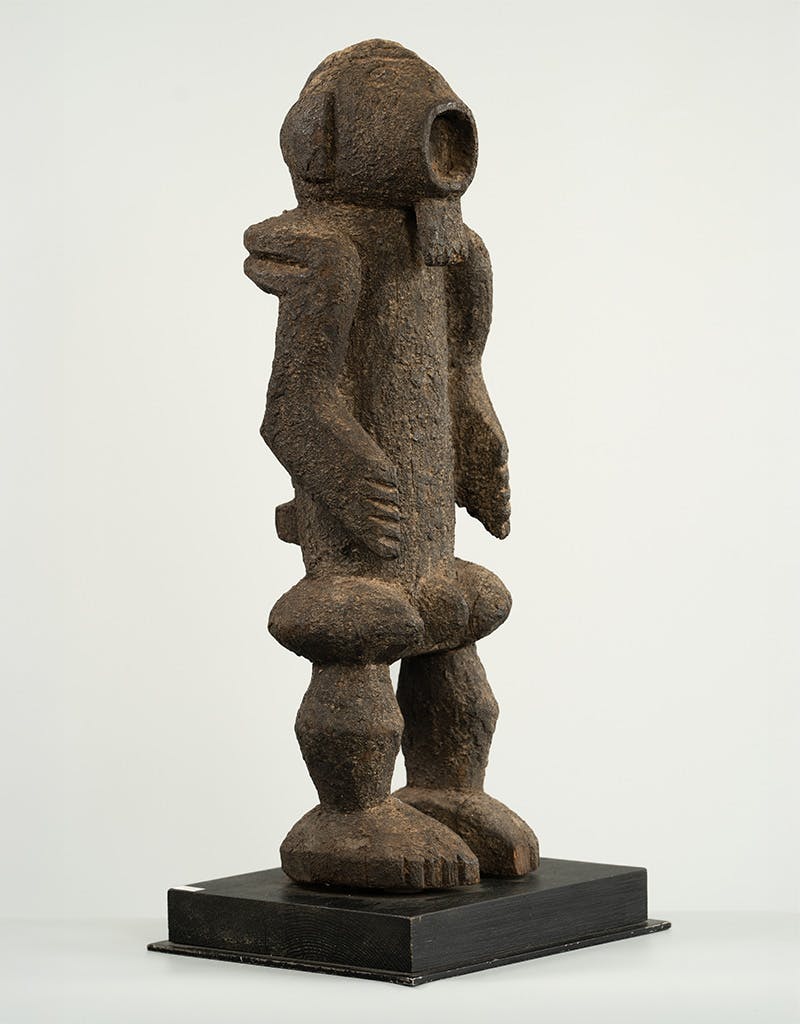
Chamba
A figurine associated with ancestor worship, it also serves as a guardian figure for the home. The Chamba people live in eastern Nigeria, south of the Benue Riv
See more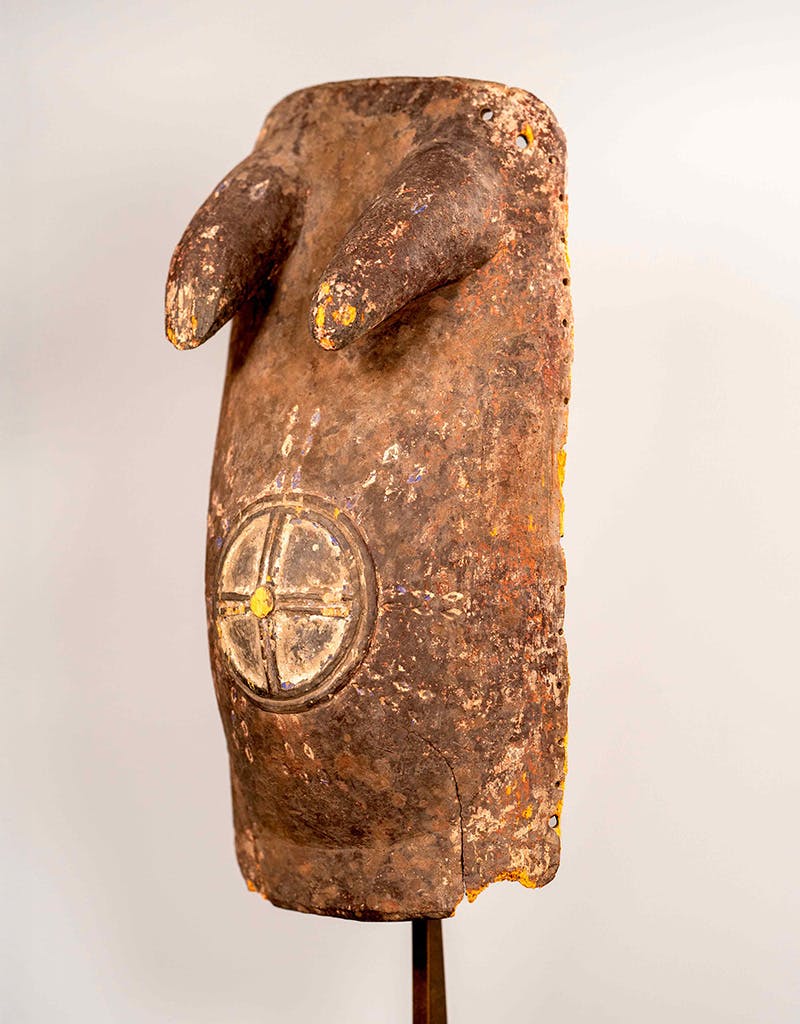
Gelede Body Mask
This mask belongs to the Gelede costume-mask type of the Yoruba people of western Nigeria and adjacent regions of present-day Benin. Unlike classic Gelede masks
See more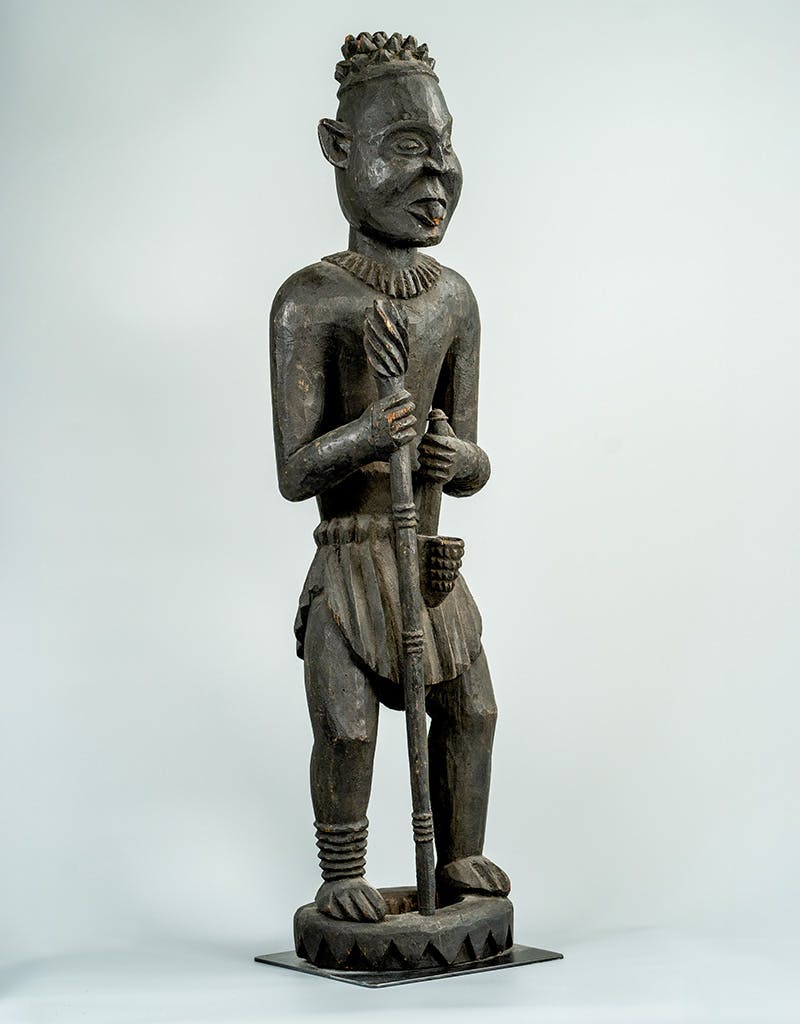
Lefem
Lefem figures are crafted as important testaments to dynastic lines of power. During the ceremonies accompanying the chief's funeral and the enthronement of his
See more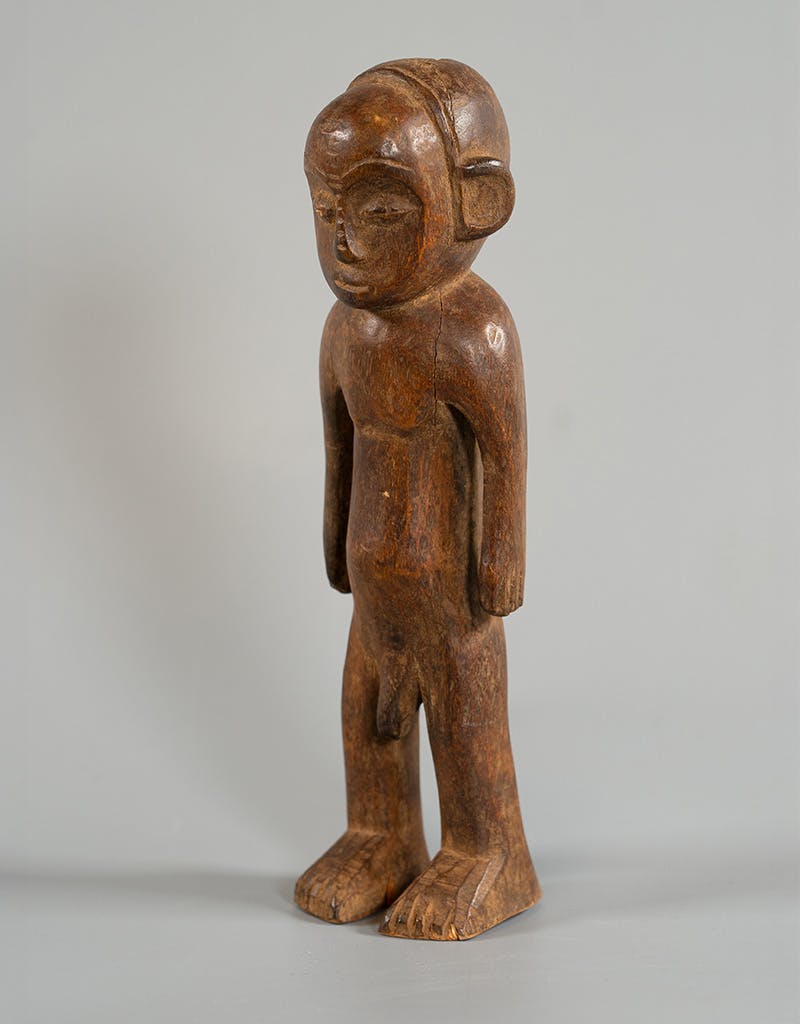
Lobala
A small male figure from the Lobala workshop — a small ethnic group of north-western Democratic Republic of the Congo (Sud-Ubangi region), inhabiting the basins
See more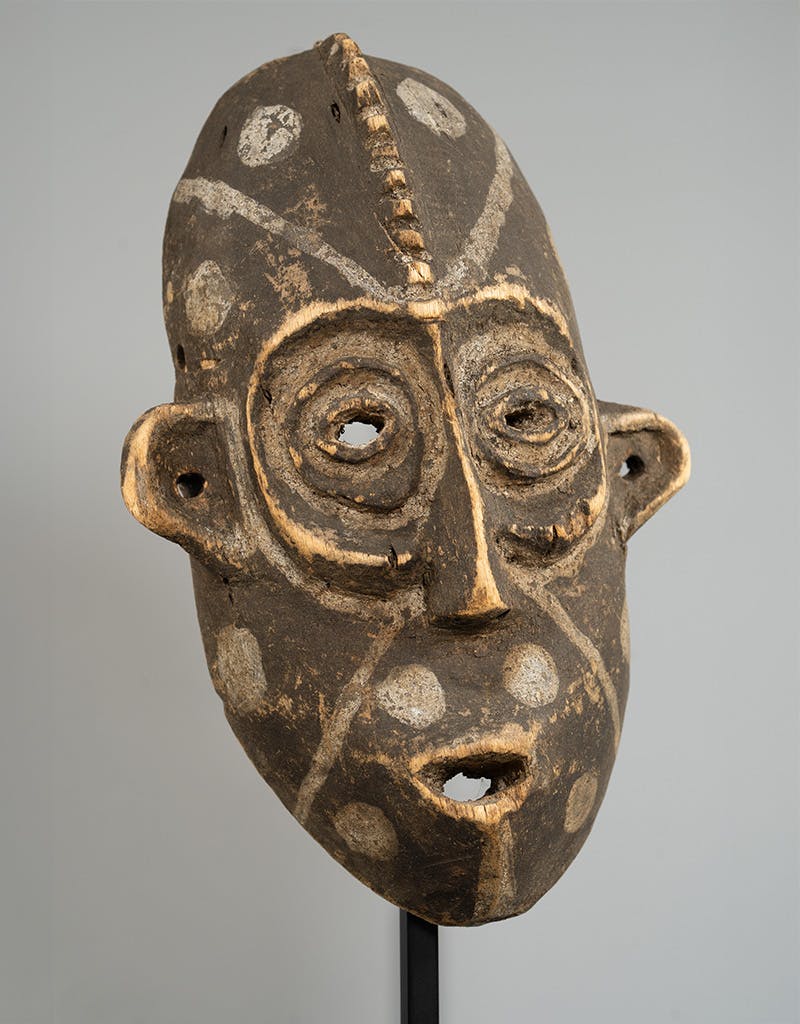
Lobala Face Mask
An oval face mask of the Lobala people of strongly expressive form. The dominant element is the great concentric circles framing the eye openings — a motif desc
See more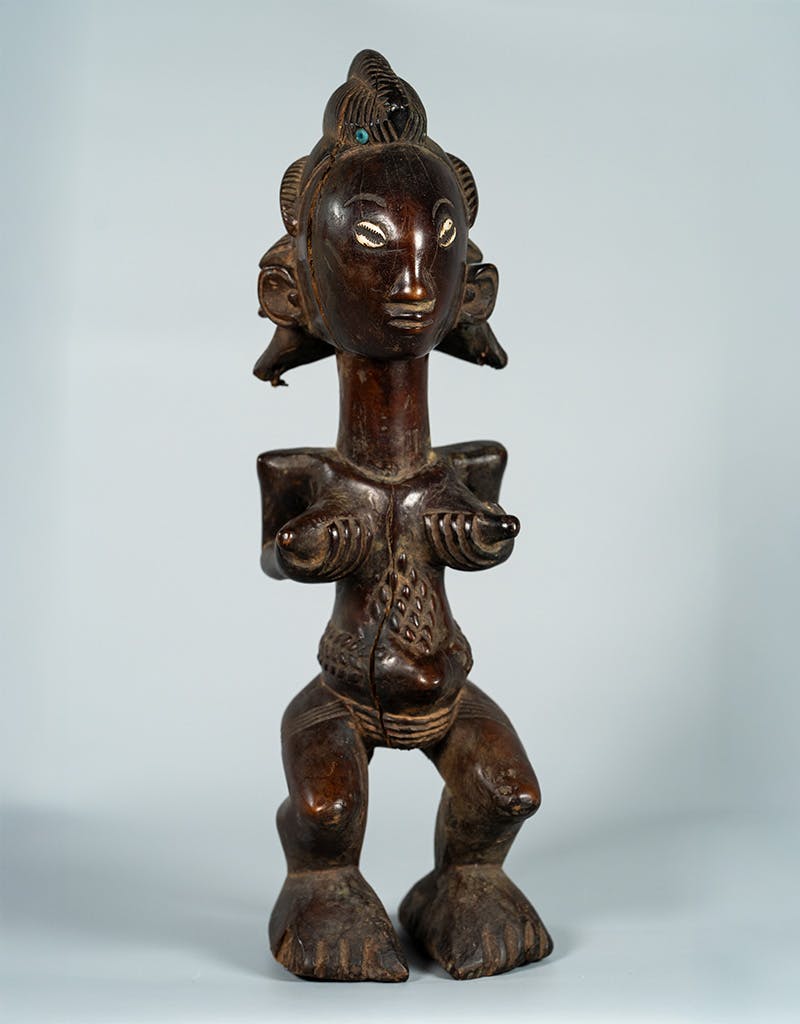
Luba
A female statuette in the canon of Luba art from south-eastern Congo (Katanga region). The figure displays the characteristic high, elaborate "cascading crown"
See more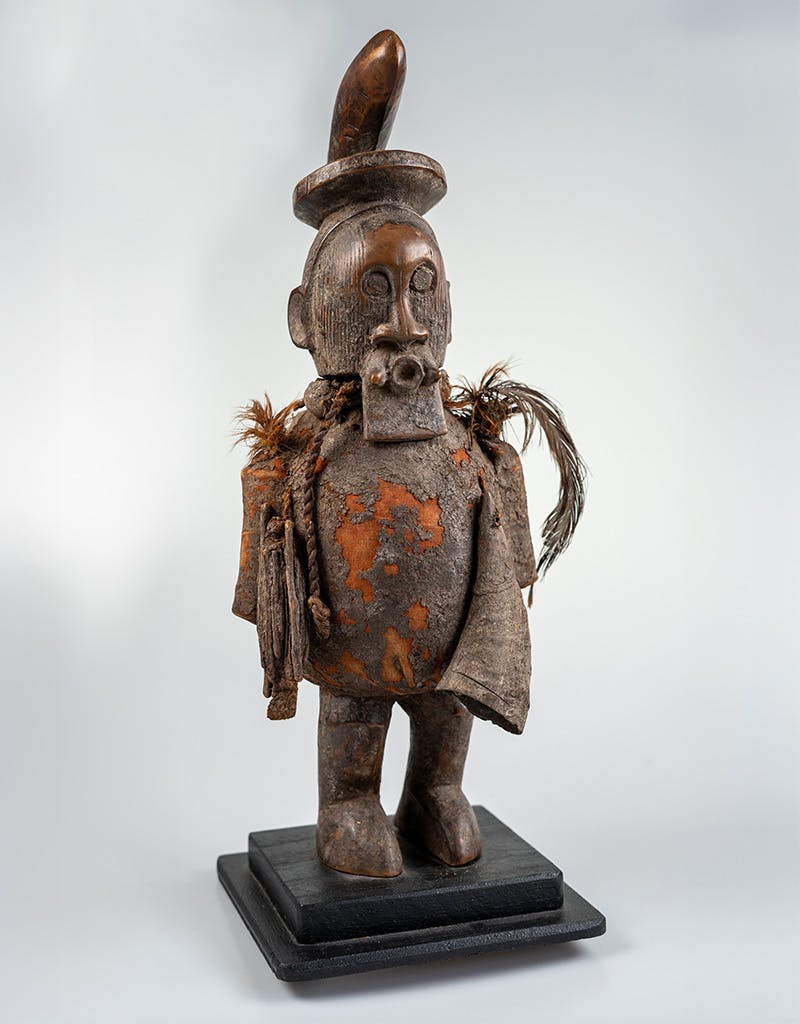
Male Biteki/Buti Power Fetish
These fetishes were made in two types, and without local knowledge, it's impossible to determine which type a given figure is. The first are figurines used for
See more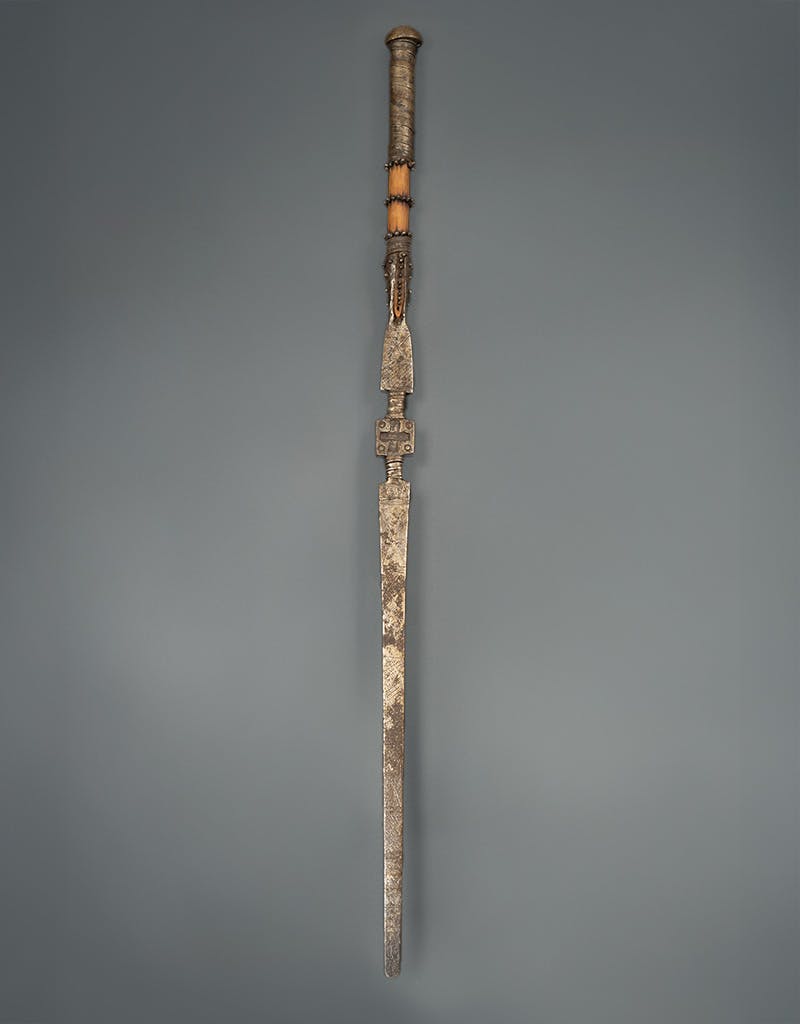
Mbele (Ceremonial Sword)
A short ceremonial sword with a slender, single-edged forged blade decorated with geometric surface engraving. A multi-part hilt: a cylindrical lower section wo
See more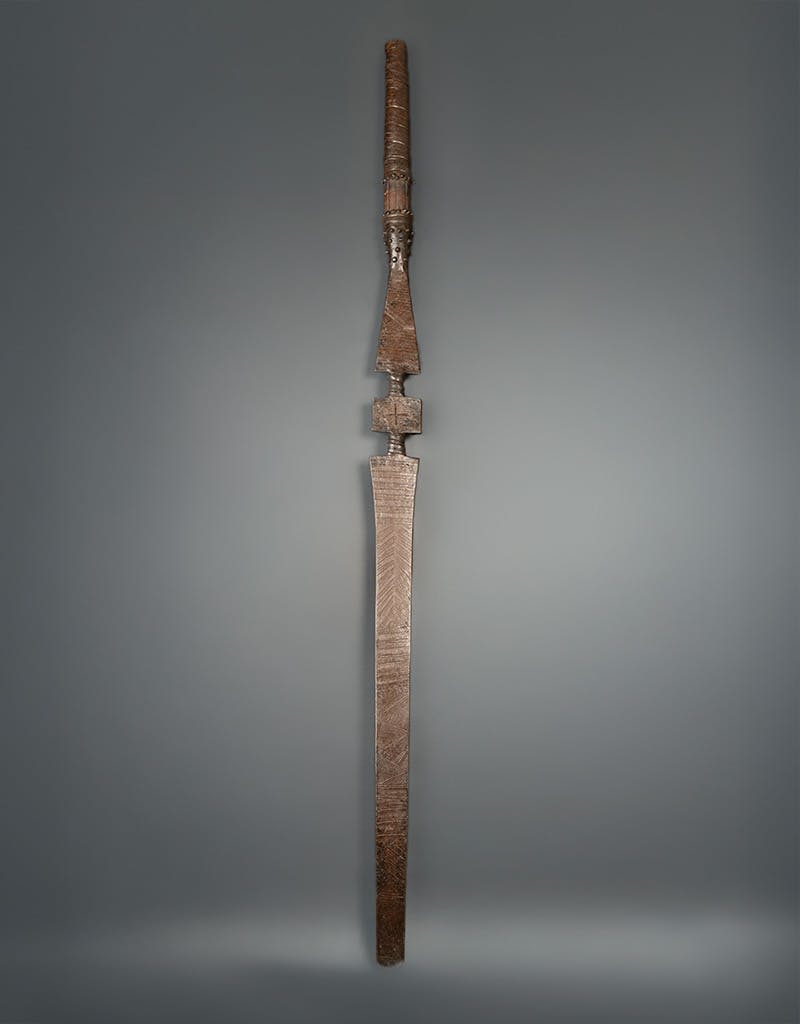
Mbele a Lulendo (Long Ceremonial Sword)
A second ceremonial sword of the same typological family — with a longer, uniform blade and similar hilt construction (fibre binding, square connector with meta
See more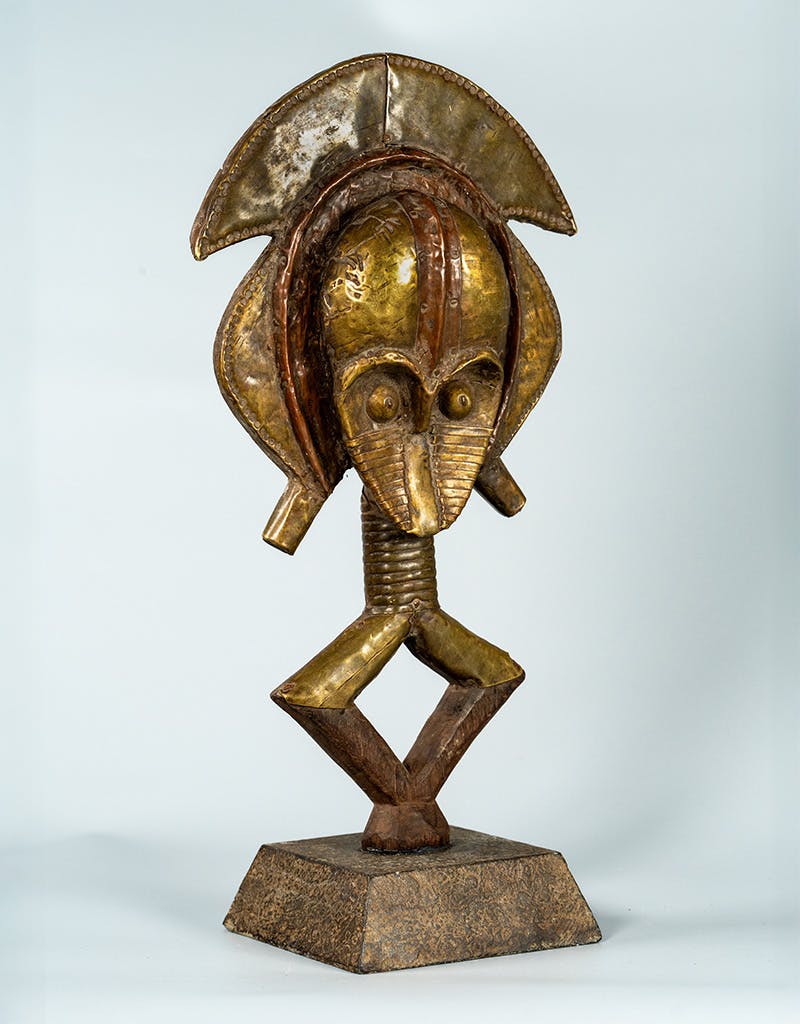
Mbulu Ngulu (Male Reliquary)
The Kota used reliquary guardian figurines (mbulu ngulu) to protect and preserve the remains and bones of family ancestors (sometimes these were personal belong
See more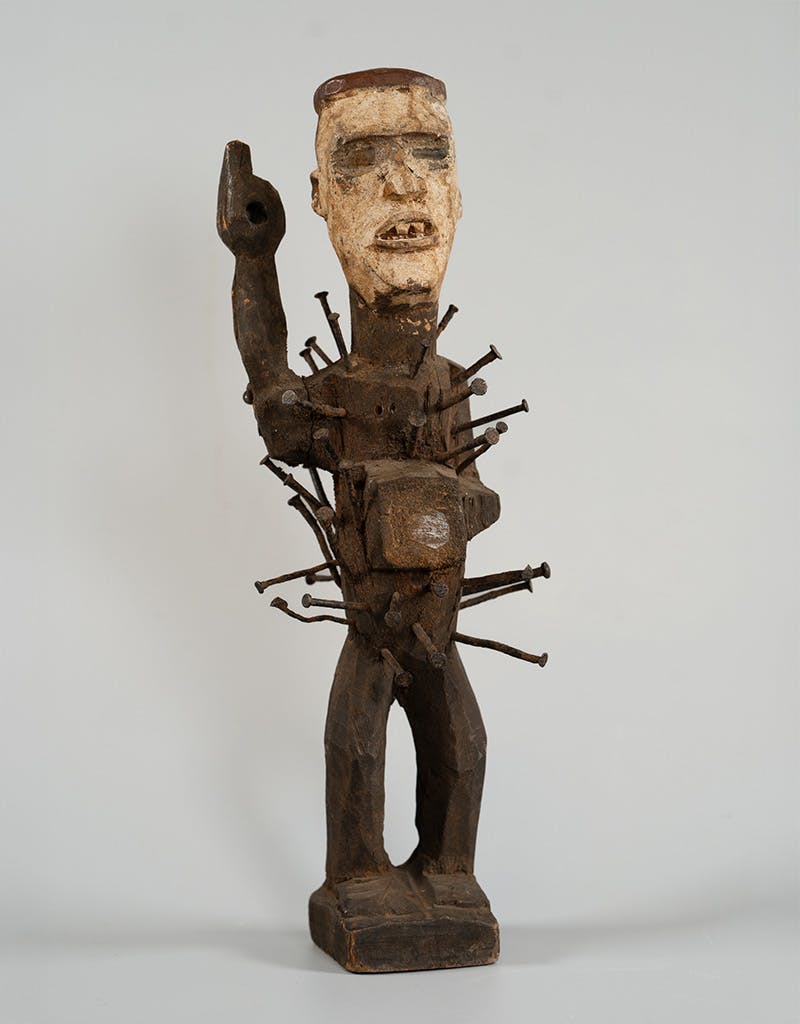
Nail Fetish (Nkisi Nkondi)
A male figure of the nkisi nkondi type — a power fetish known from the traditions of the peoples of the Lower Congo (Yombe, Vili, Woyo, Kongo) and also adopted
See more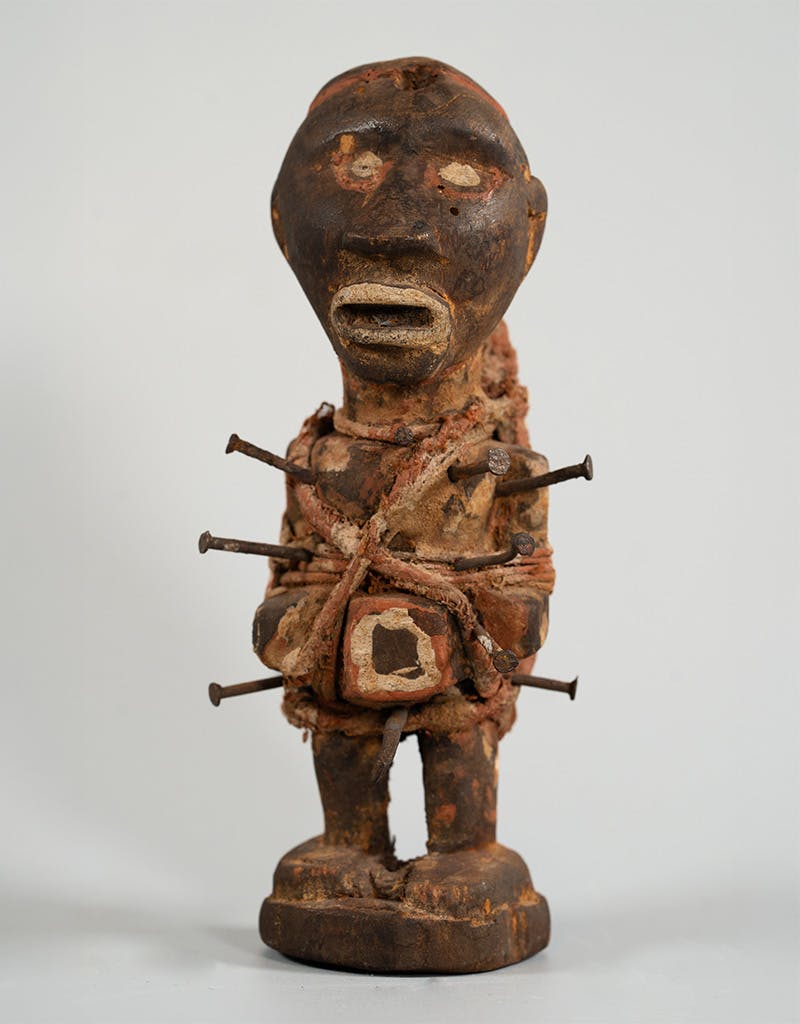
Nail Fetish with Mirror (Nkisi Nkondi)
The second nkisi figure in the collection — a "wrapped" variant in which the torso of the sculpture has been bound in fabric and cord, forming a ritual "skin" f
See more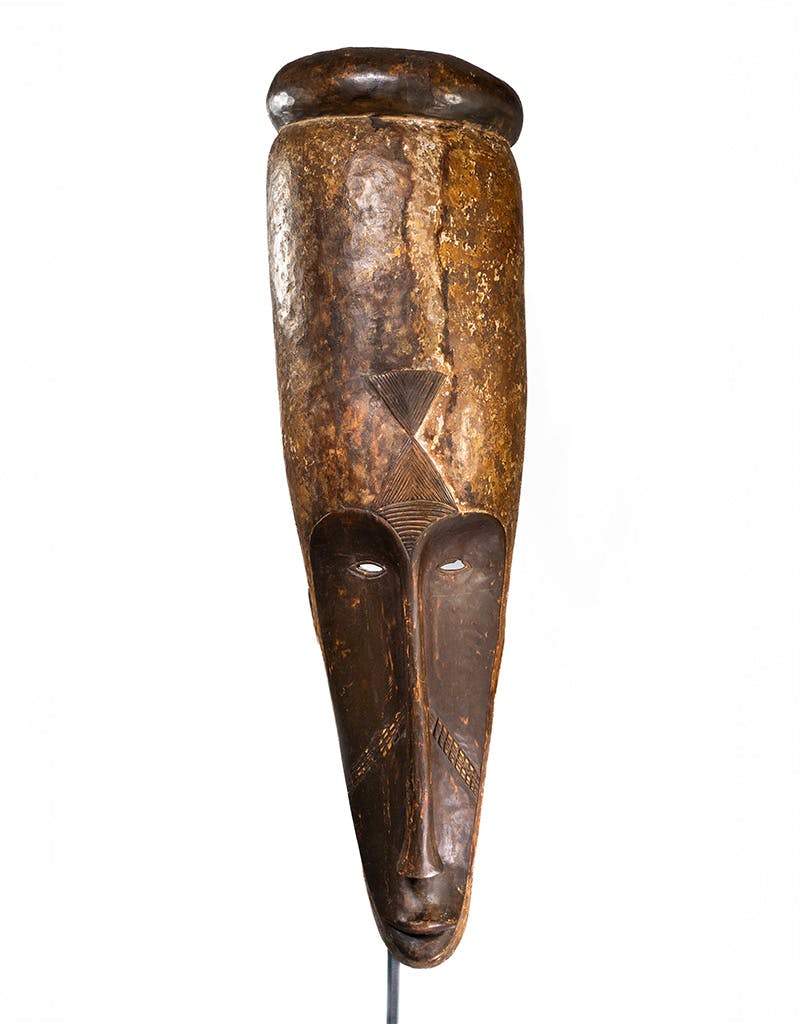
Ngil
This Fang mask was created for a secret society called ngil (gorilla). It is used during the induction ceremonies and the execution of criminals. These ceremoni
See more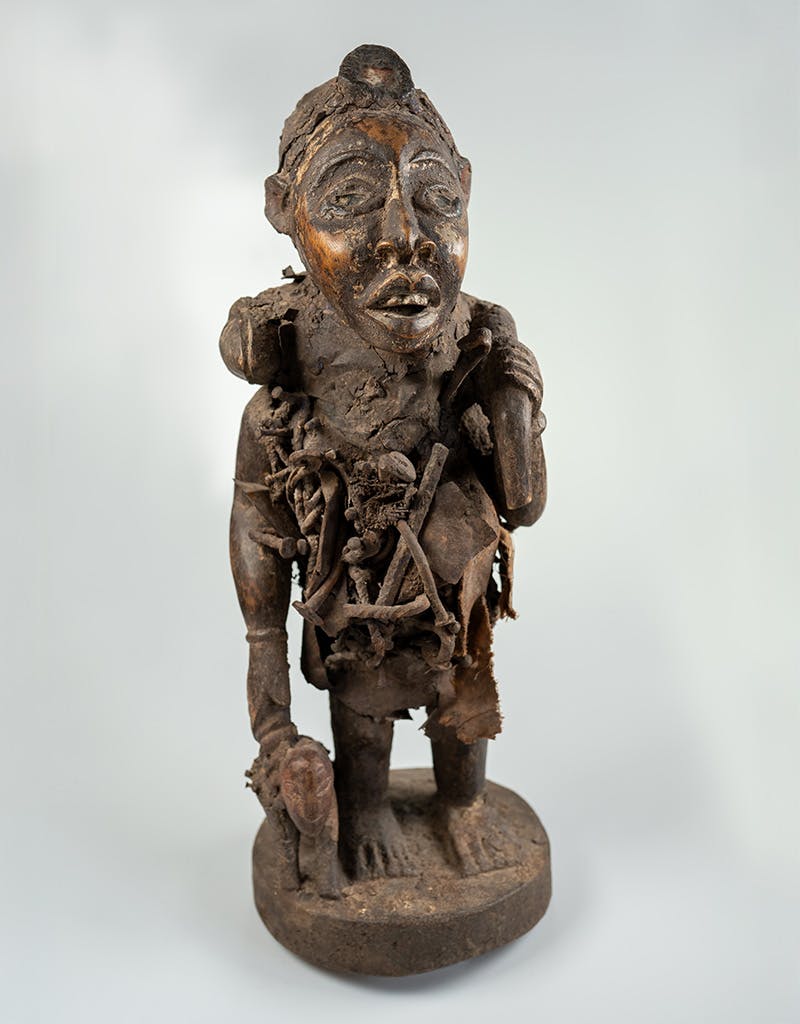
Nkishi nkondi
Mnikisi are always made by a fortune-teller, ngagnge (sorcerer, healer), or other figure who may have a connection to the afterlife. While crafting the figurine
See more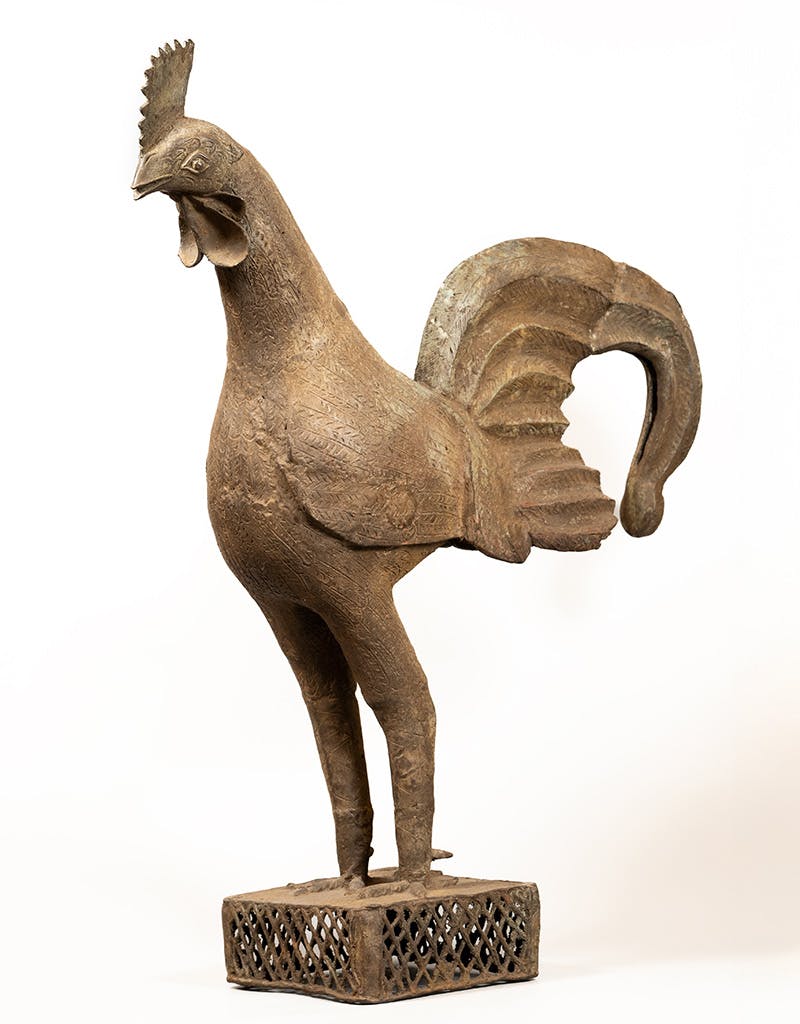
Rooster - Okukur
Origin: Nigeria People/Ethnic Group: Kingdom of Benin Material: Bronze Technique: Casting Okukur depicts a rooster, a symbol of power, fertility, and wealth. Su
See more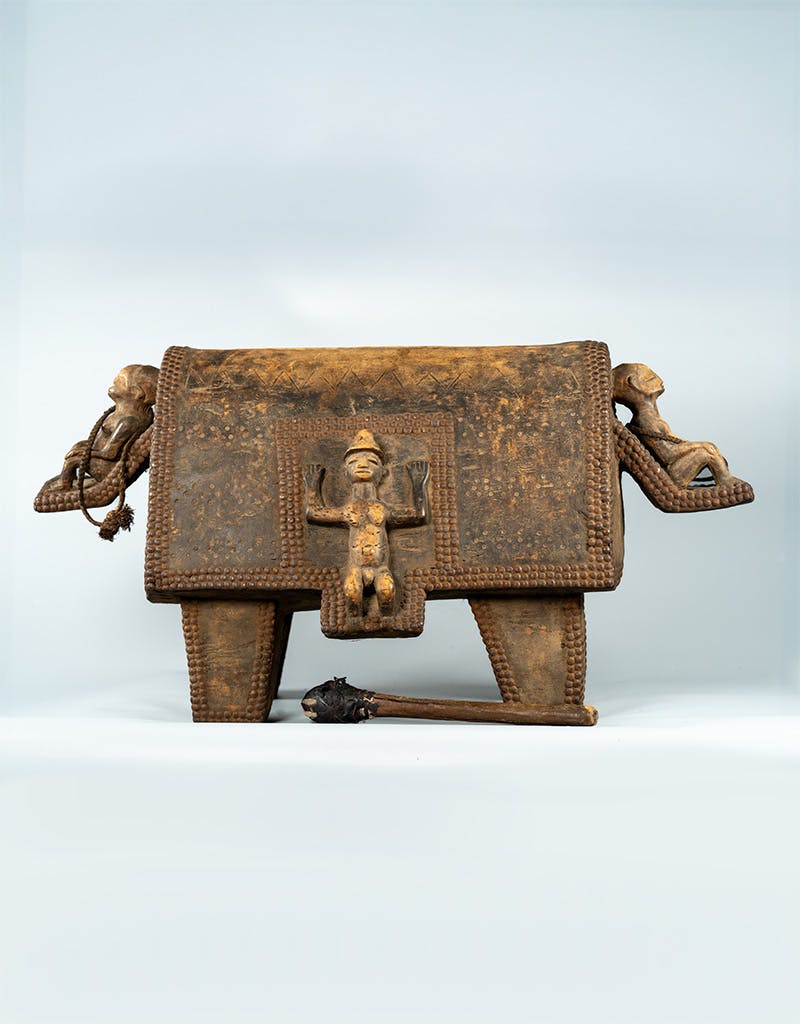
Slit Drum
This drum was designed and constructed by the Bakongo people of the Federal Republic of the Congo. Rhythmic refinement and acute musical sensitivity are highly
See more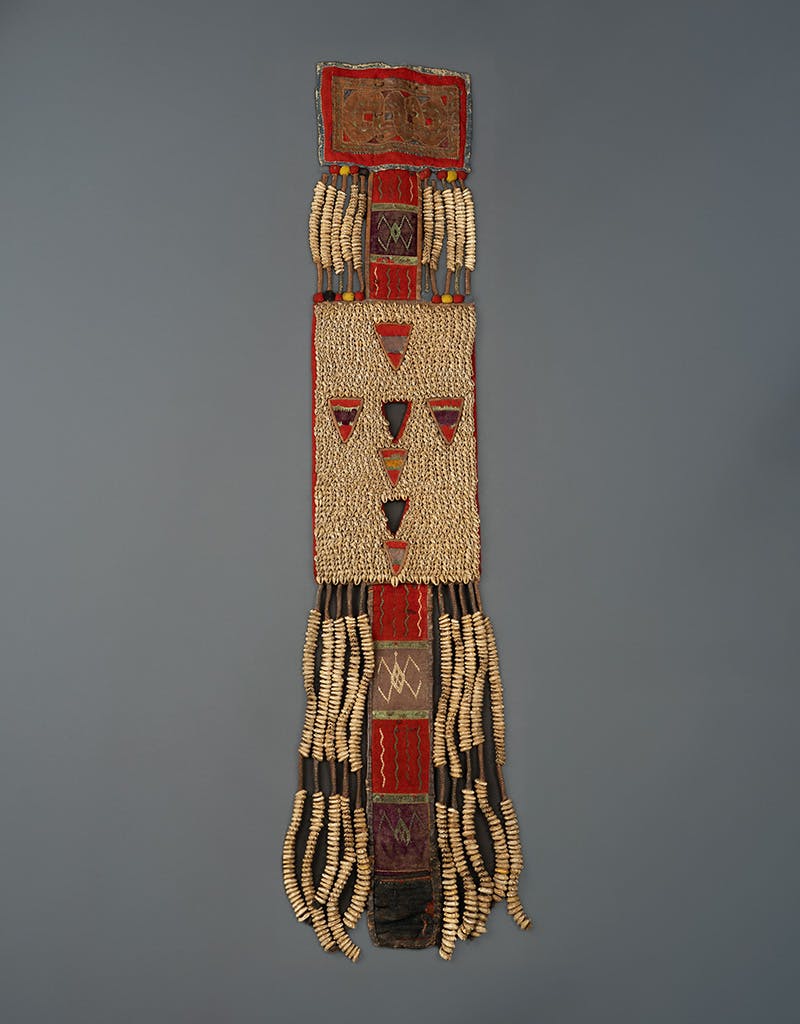
Sword Sheath
A ceremonial sheath for a sword or prestige short knife, executed in the technique of plant-fibre plaitwork with rich finishing of cowrie shells, glass beads, a
See more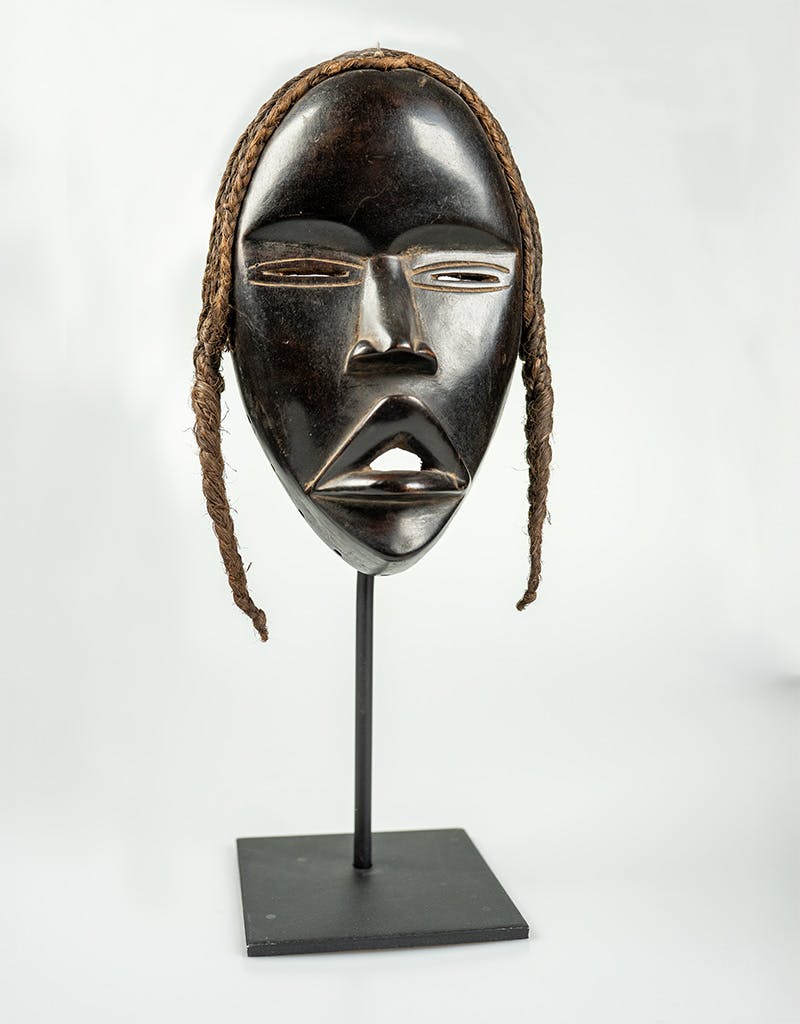
Takangle/deangle
The takangle mask evokes delicate female features. Narrow (squinted) eyes and a striking hairstyle have several meanings. First, it is a mask used for entertain
See more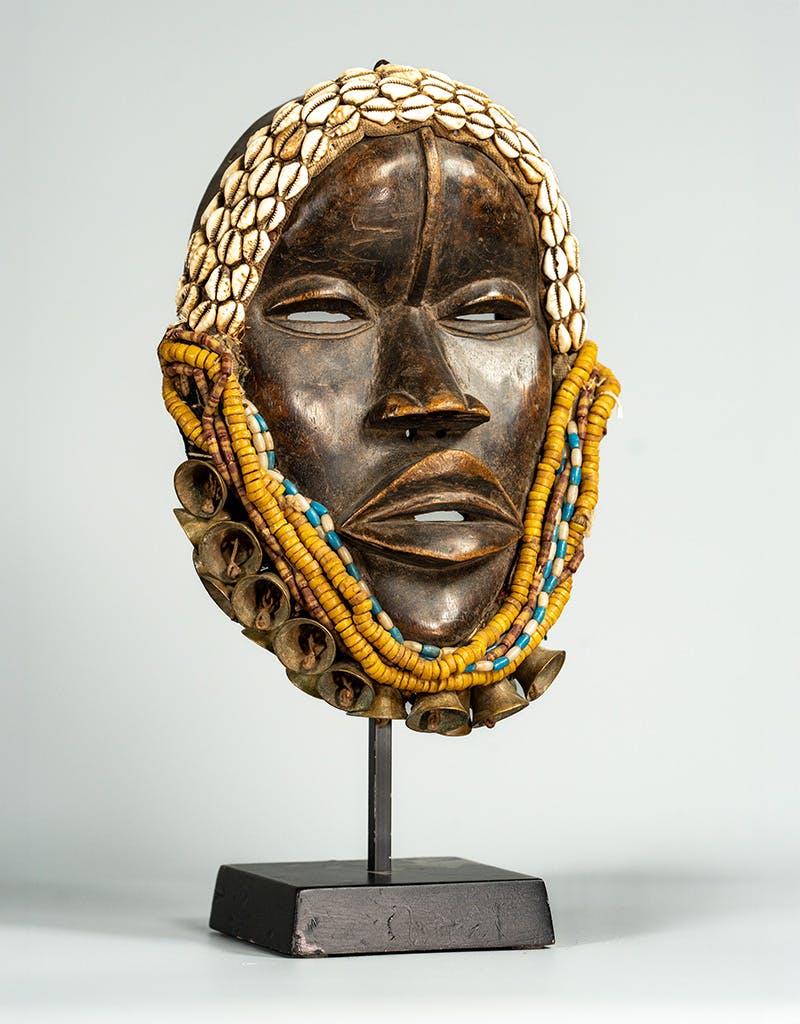
Takangle/deangle
Origin: Liberia People/Ethnic Group: Dan Material: Wood, natural patina Technique: Sculptural The Takangle mask evokes delicate female features. Narrow (squinte
See more
Troh
The Bangwa people are divided into nine smaller, autonomous chiefdoms, which are governed by high-ranking members of the male Troh association, also known as th
See more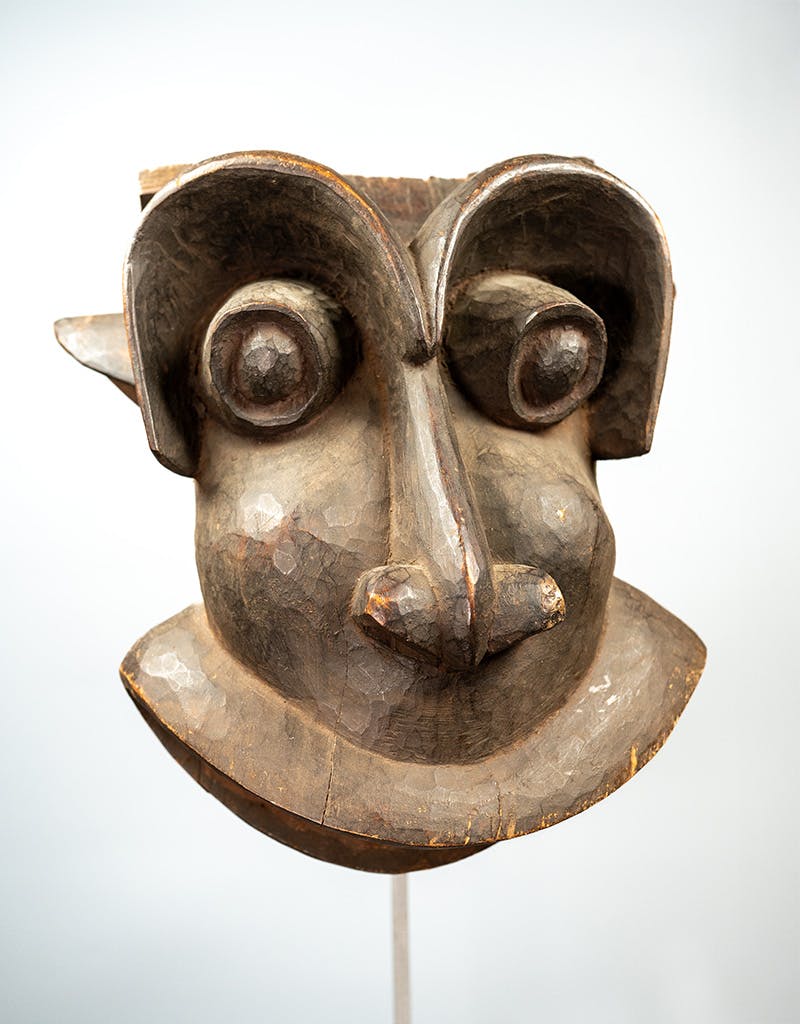
Troh
The Bangwa people are divided into nine smaller, autonomous chiefdoms, which are governed by high-ranking members of the male Troh association, also known as th
See more